Resume summary vs objective — which one do you actually need?
Jorge Sánchez·August 24, 2026
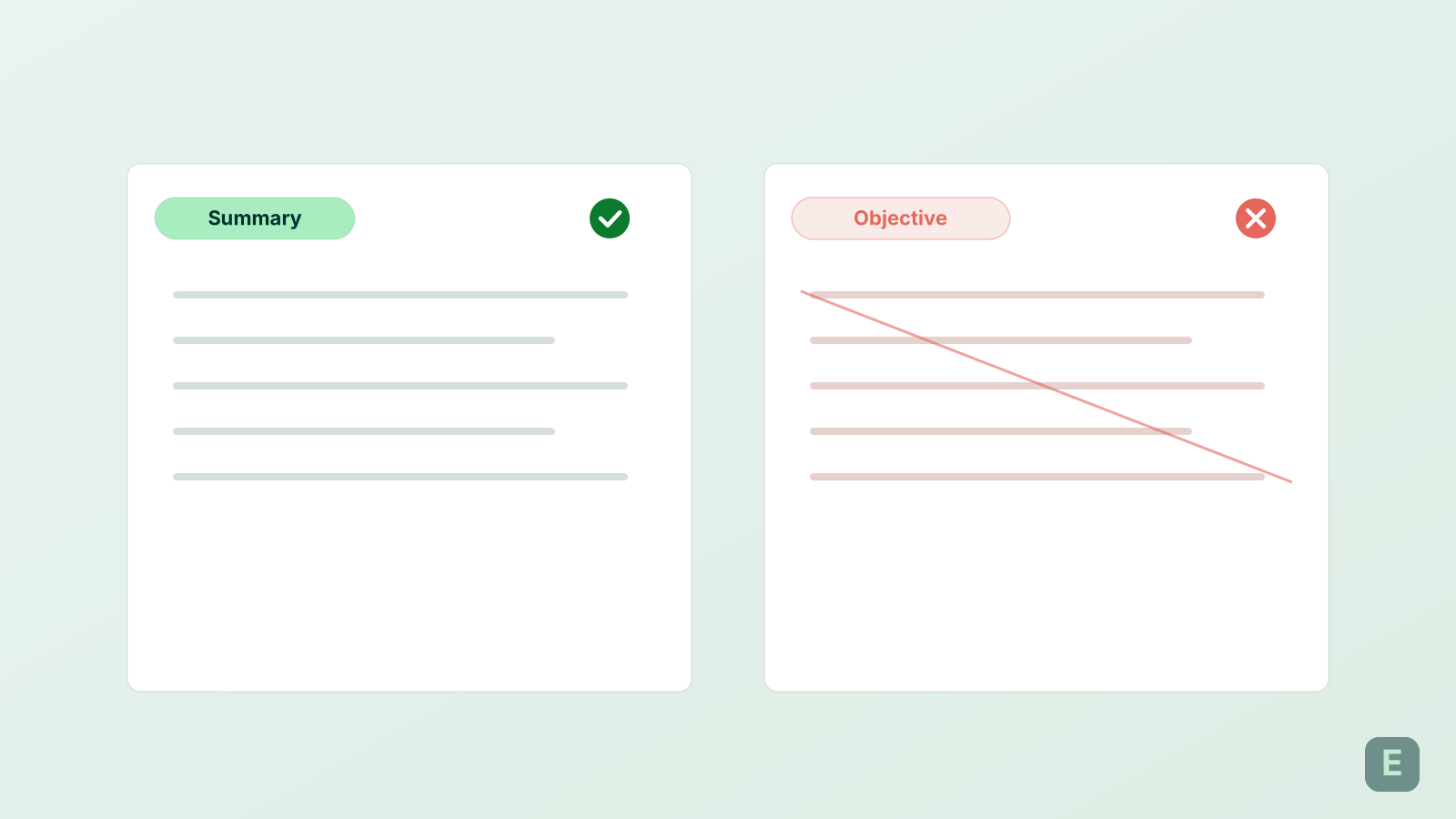
The objective statement is dead for 90% of candidates. When a summary earns its space, when to skip both, and 8 real summary examples by role.
The top-of-resume section — Summary or Objective, or nothing at all — is one of the most over-thought decisions in the entire document. In practice it's a simple decision tree, and most candidates should default to skipping it.
Every Emplirao template lets you turn the summary section on or off with one click — pick a template and decide based on your specific profile, not on template default.
Browse templatesThe decision tree
- Are you a student or early-career (0-2 years) applying to your first serious role? → Objective statement (1 sentence, names the role you want + one relevant strength).
- Are you doing a career change into an unrelated field? → Summary (2 sentences, one on your existing depth, one bridging to the target field).
- Are you 3+ years into a linear career trajectory? → Consider a summary. If it wouldn't tell the recruiter something they can't get from the top bullet, skip.
- Are you a senior candidate with a distinctive positioning (specialist, generalist, industry-crosser)? → Summary is worth 2 sentences to frame the positioning before the recruiter starts scanning.
Objective statement examples that work
“Recent MSc Computer Science graduate seeking a graduate software engineer role focused on distributed systems, backed by two years of open-source contribution to Kubernetes.”
— Student / early-career
“Registered nurse (RN, 8 years pediatric ICU) transitioning into clinical informatics — pursuing analyst roles where healthcare-workflow expertise informs data product decisions.”
— Career change
Professional summary examples that earn their space
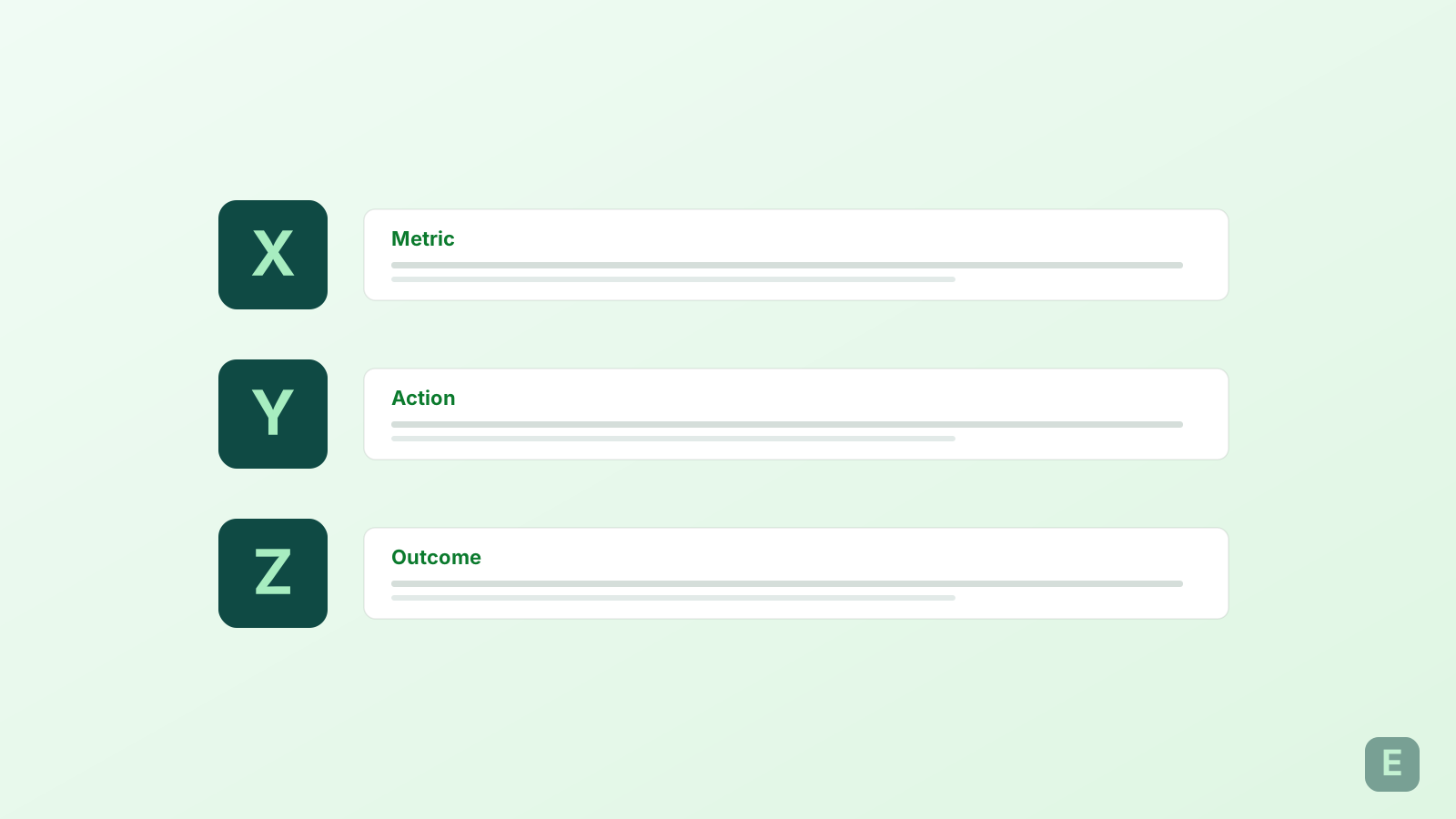
“Staff engineer with 8 years building payment infrastructure at Series C+ fintechs. Shipped the last three PCI-DSS migrations without downtime; led the team that cut authorization latency 60% across 4M daily transactions.”
— Senior specialist
“Design leader with a mixed hardware + software background. 12 years spanning product design at Palm, iOS visual design at Apple, and design-system leadership at a growth-stage B2B SaaS. Currently focused on tools that make cross-team design decisions faster.”
— Senior generalist
What NOT to put in a summary
- "Passionate and driven professional with a proven track record." — pure filler; every candidate claims this.
- "Seeking opportunity to leverage skills." — the recruiter knows you're job-hunting; this line adds nothing.
- A list of skills — that's the Skills section's job. The summary is for positioning, not enumeration.
- Your career narrative in 5 sentences — recruiters give summaries about 8 seconds. Compress ruthlessly.
Test: if you cover your summary with your thumb, does your resume still make sense? If yes, the summary wasn't earning its space. Cut it.
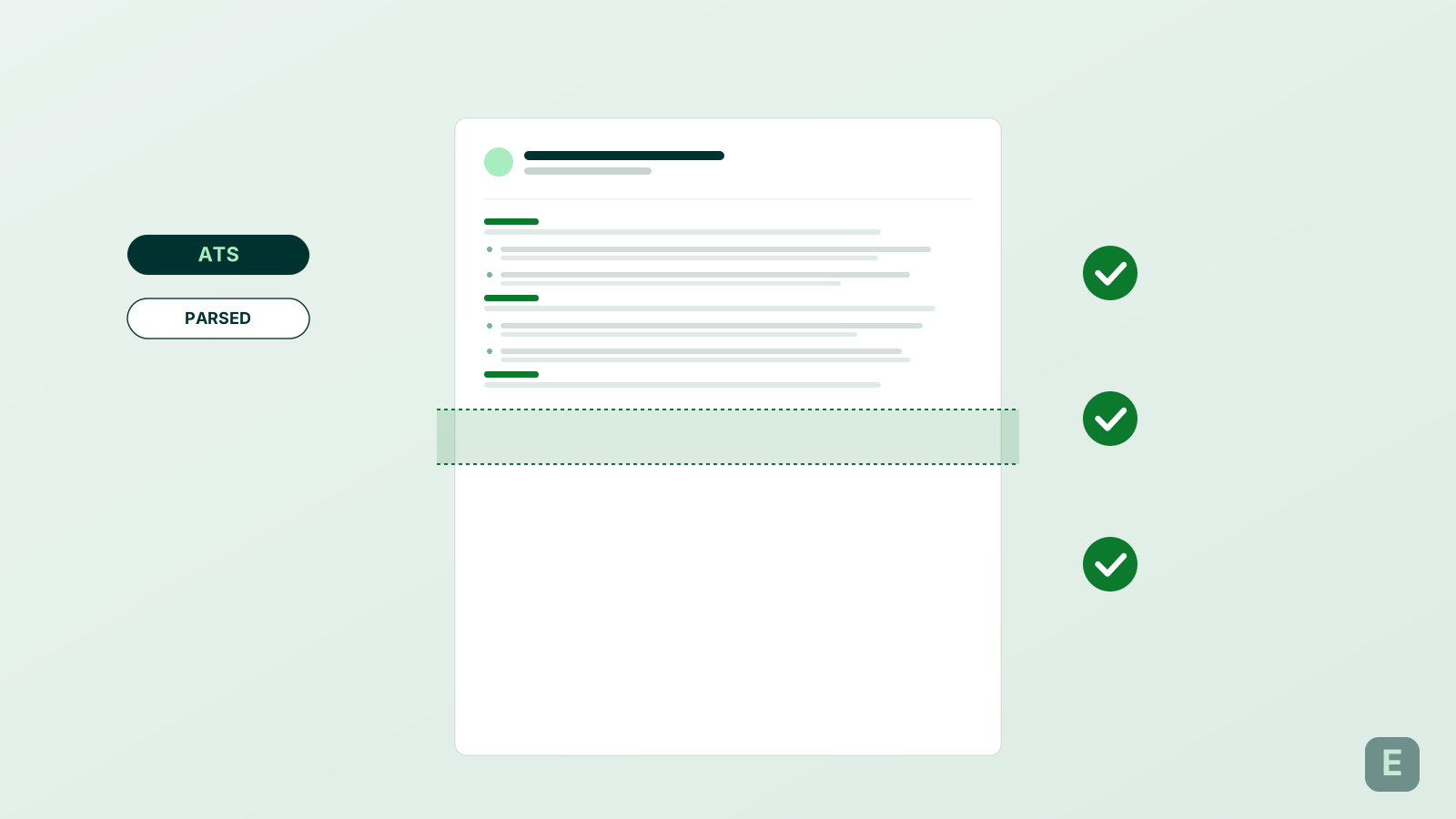
The summary is one section. The rest of the resume architecture — bullets, keywords, ATS parsing — is where impact compounds. Start with the pillar guide.
Read the complete ATS resume guide