Resume length: one page or two? The honest rule by experience
Jorge Sánchez·August 24, 2026
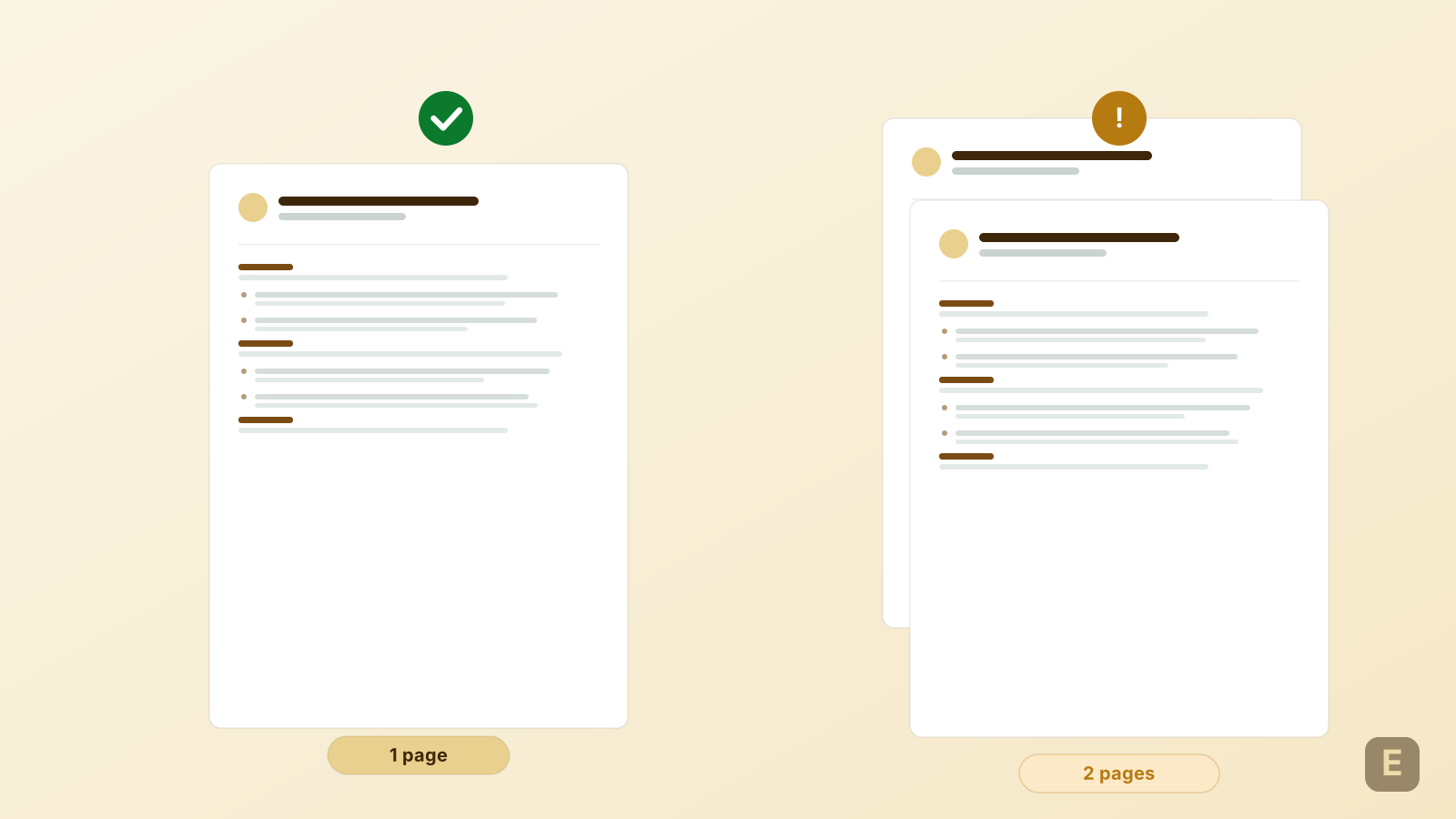
Under 10 years of experience: one page. Beyond that: two. Three only for academic or highly specialized roles. What to cut and what to keep, per bracket.
The one-vs-two-page debate has been muddied by decades of contradictory career advice. The honest answer depends on exactly one variable: how much of your experience earns its space. Everything else is derivative.
Emplirao's templates are designed to hit any length cleanly — the same content flows into a one-page or two-page layout without breaking hierarchy or ATS parsing.
Browse resume templatesThe rule by experience bracket
| Experience | Length | Why |
|---|---|---|
| 0-3 years / student | 1 page | Not enough substance for 2 pages without filler. |
| 4-10 years | 1 page (unless multi-role/multi-industry) | Signal-density is highest at 1 page. 2 pages only if bullets actually differentiate you. |
| 10-20 years | 2 pages | Compressing this to 1 hides the seniority the recruiter needs. |
| 20+ years | 2 pages (cut roles older than 15 years) | Truncate the tail. Old roles carry less signal than recent ones. |
| Academic / medical / research | 3+ pages (CV format) | Publications, grants, teaching all expected — different document entirely. |
What to cut when you need to trim to 1 page
- "References available on request" — always dead weight.
- Full mailing address — city + state (or country) is enough.
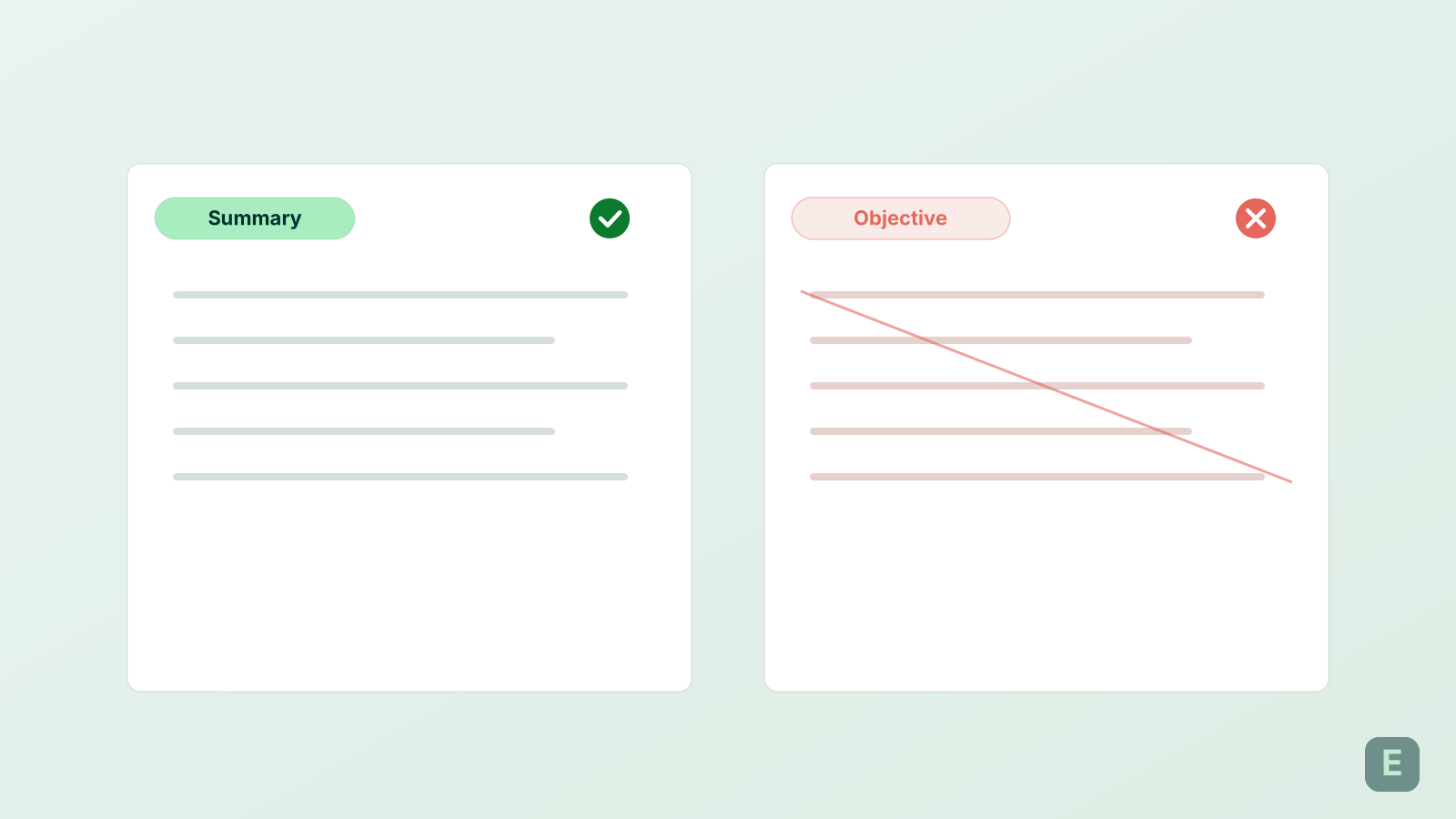
- Objective statement — dead for 90% of candidates (see the summary vs objective piece below).
- Roles older than 10 years — one line each in a "Prior Experience" tail, if relevant.
- Coursework — cut once you have 3+ years of professional experience.
- Redundant bullets — if two bullets prove the same skill, keep the one with a number.
- Personal interests as a full section — unless directly relevant to the role.
What to expand when you need to fill to 2 pages
- Add specific technologies, methodologies, or clients per bullet — from generic "managed pipeline" to "managed 4-stage CI pipeline (GitHub Actions → staging → smoke tests → prod)."
- Add outcome bullets that were previously implicit. If you shipped X, name the metric it moved.
- Add a Certifications section if you have 3+ that matter to the role.
- Add a Projects section for roles where side/open-source work is signal (engineering, design, ML).
Never pad to reach 2 pages. A crisp 1.4-page resume with margins tightened to fit reads as amateur. Either fill legitimately to a full 2 pages or trim confidently to 1.
Once length is right, run through the 15 common resume mistakes — that's where signal density is actually built or lost.
Read the 15 common mistakesFrequently asked questions
- Is a 2-page resume ever OK for someone with less than 5 years of experience?
- Rarely — only when the profile genuinely spans multiple industries (military-to-civilian transitions, athlete-to-analyst pivots, PhDs entering industry). If your background is linear, 1 page is right.
- Does a longer resume mean fewer callbacks?
- Length itself is not the cause. Correlation exists because longer resumes are more often padded — a padded 2-page resume has less signal per line than a tight 1-page one, and recruiters spot the padding.
- What about CVs vs resumes internationally?
- In the US, "resume" = short (1-2 pages). In the UK, EU, and academic contexts, "CV" often means the longer document with publications, grants, and a full career history. If you're applying in the US market, ignore the CV convention regardless of your background.