The STAR method: how to structure every behavioral interview answer
Jorge Sánchez·24. august 2026
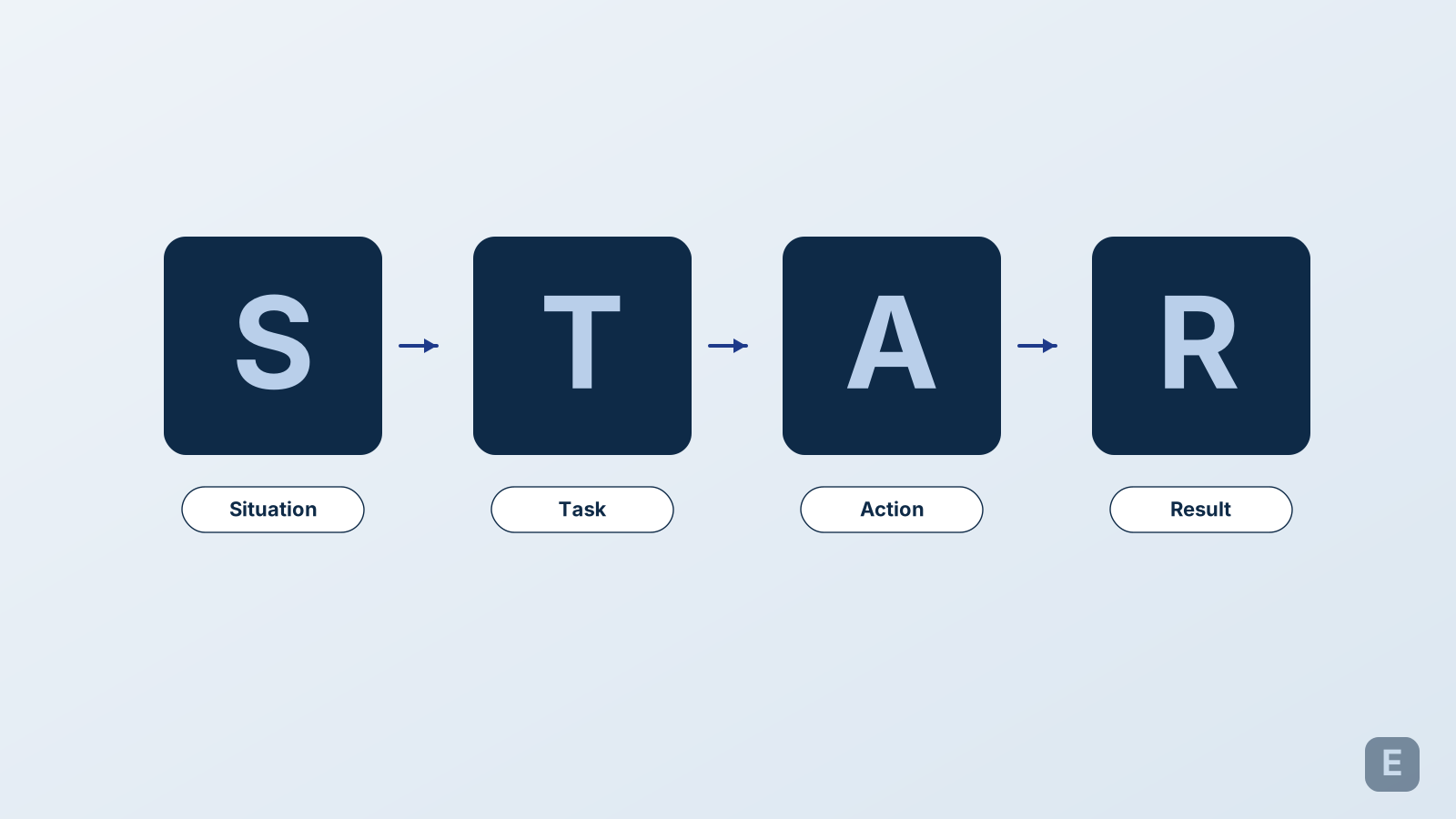
Situation, Task, Action, Result — the four-part frame every FAANG interviewer is silently checking against. With three worked examples per common behavioral question and the two mistakes that flatten most answers.
Behavioral interviewers at FAANG-adjacent companies score answers on a rubric — and STAR is what the rubric expects. Not because there's a rule, but because Situation → Task → Action → Result is how you make a story evaluable in 90 seconds.
Emplirao's Interview Coach generates STAR-formatted example answers from your actual CV — you tell it the question type and get back three grounded stories to practice.
Try Interview CoachWhat each letter demands
S — Situation (15-20 seconds)
Set the scene. Company, team, product, timeline. No exposition dumps — just enough for the interviewer to picture the environment. "Q3 of last year, I was leading a 4-person growth pod at a Series C fintech. Our onboarding was activating 18% day-7." Done.
T — Task (15 seconds)
The stake — why it mattered. Not what you were assigned, but what was at risk if you didn't solve it. This is the letter most people skip. "CFO gave us 90 days to hit 30% activation or we'd cut the free tier. Losing the free tier would kill our top-of-funnel entirely."
A — Action (40-50 seconds — the meat)
What YOU did, specifically. Decisions, trade-offs, the thing that could have gone wrong. This is where credit-hedging kills the answer — say "I," not "we," for the actions that were yours. If the team did it collectively, name the specific piece that was your call.
R — Result (15 seconds)
The measurable outcome + one line of second-order impact. "We hit 34% by day 60 and the CFO kept the free tier. Six months later, MRR from that cohort had grown 3x." Numbers if you have them, qualitative if you don't — but always concrete.
Worked example: conflict question
“Tell me about a time you disagreed with a manager and how you handled it.”
— Common behavioral prompt
S: Two quarters into leading platform infra at a Series B, my VP wanted to migrate everything to Kubernetes in Q2 to "look enterprise-ready" for a fundraise. T: I had two months of on-call data showing our current Fargate setup handled every load spike we'd faced — and a 6-week Kubernetes migration would freeze the roadmap and put a fragile new system between us and every user request. A: I asked for a 30-minute room with the VP and CTO. Brought the on-call incident data (three incidents in six months, all resolved in under 20 minutes) and a napkin cost model showing K8s ops would cost 1.5 FTE we didn't have. Proposed a middle path: an internal one-pager for investor conversations explaining our infra maturity in enterprise-legible terms. R: We shipped the one-pager in a week, closed the round two months later, and stayed on Fargate. Twelve months on, no regrets on the call — and the VP later credited that meeting as the moment she trusted me on infra decisions.
Common behavioral questions by category
| Category | Prompt pattern | What the interviewer scores |
|---|---|---|
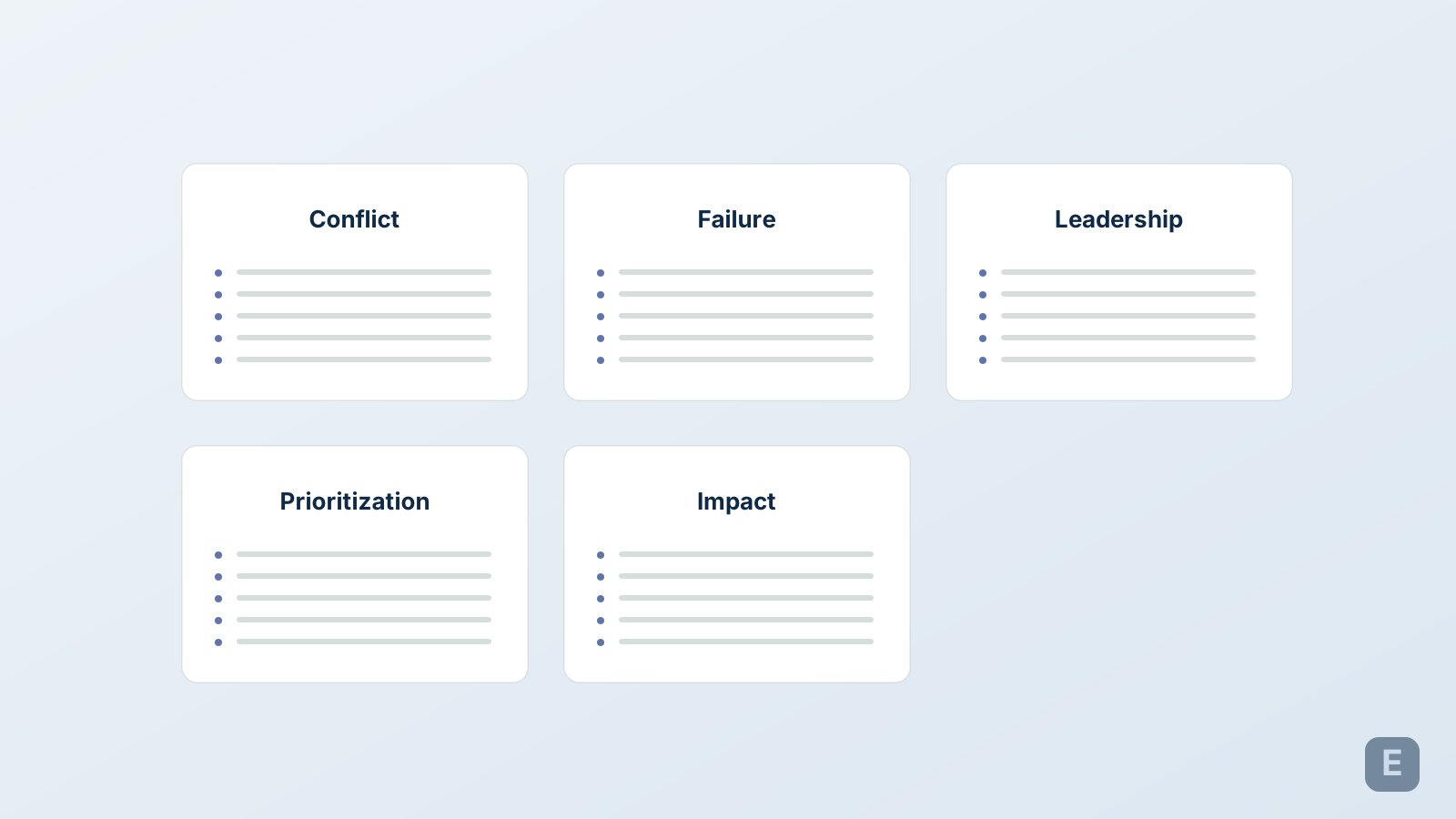
| Conflict | "Disagreed with a peer / manager" | Adult navigation, evidence-driven, kept the relationship. |
| Failure | "Time you failed / project didn't work" | Ownership without self-flagellation, explicit learning. |
| Ambiguity | "Started a project with unclear scope" | Structured decomposition, comfort operating without a spec. |
| Leadership | "Led without formal authority" | Influence via clarity, not title. Mentions of specific people you brought along. |
| Prioritization | "How you decided what to cut" | Explicit criteria, willingness to say no to loud stakeholders. |
The two mistakes to fix before the interview
- Skipping T (the stake). Without it, the interviewer can't tell whether you solved a big problem or a small one — and the answer sounds like resume noise.
- "We" instead of "I". Rehearse each story once with "I" statements swapped in. If the story still sounds true, that's the version to tell.
The 24-hour follow-up after the interview matters almost as much as the answer itself — see the 12 thank-you email templates by round type.
Read thank-you email templatesOfte stilte spørsmål
- How many STAR stories should I prepare?
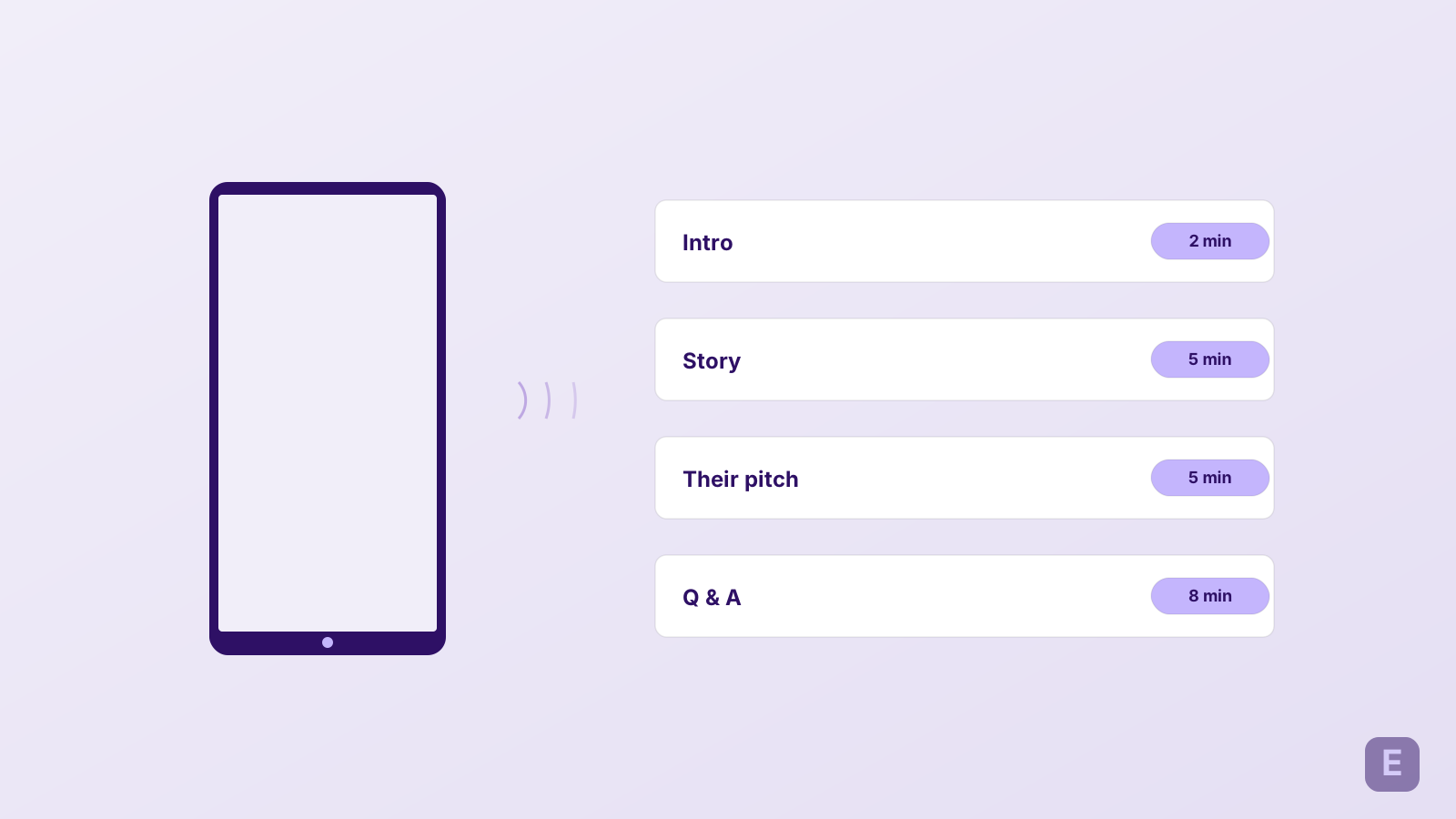
- 5-8 stories that cover the categories above (conflict, failure, ambiguity, leadership, prioritization) will handle 90% of behavioral questions. Practice each one out loud until it fits in 90 seconds without notes. One story often covers multiple categories with a different framing.
- What if I don't have a metric for the Result?
- Use a qualitative signal: shipped on time, unblocked the team, decision was later validated, no incidents in production, promoted after. Interviewers know not every result has a percentage — but they always expect a concrete outcome, not "and it went well."
- Should I explicitly say "situation," "task," "action," "result"?
- Never. The interviewer knows the frame — labeling the parts out loud sounds robotic. The frame is scaffolding for your brain, not narration for theirs.