Salary questions: honest answers to the awkward ones
Jorge Sánchez·August 10, 2026
"What's your expected salary?" is a negotiation, not a survey. Scripts that keep you in the running without leaving money on the table — for early-career and senior tracks.
Salary questions in interviews are treated by hiring teams as data-collection but they're actually negotiation opens. The recruiter is trying to anchor the offer as low as they can while staying in your acceptance zone. Every honest, direct answer moves the eventual offer downward.
Emplirao's Salary Coach benchmarks your role against live jobs in your target market — so the range you cite comes from real postings, not gut feel.
Get a market rangeThe four questions and the scripts
1. "What are your salary expectations?"
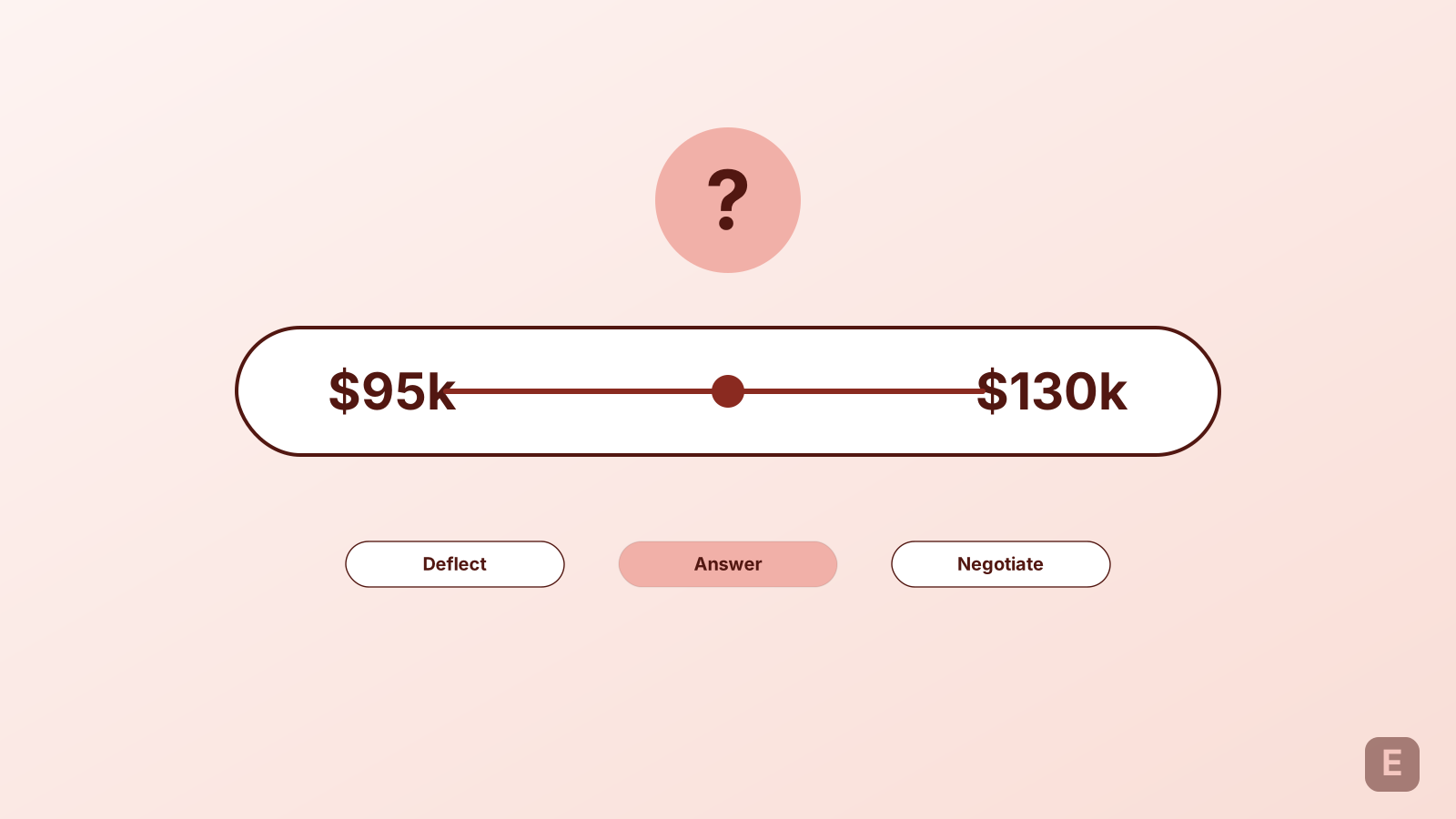
Deflect first: "I'd like to understand the role better before landing on a number — is there a range budgeted for this position?" If they push: "For comparable [role/seniority] roles in [city/remote], I've seen ranges from $X to $Y. I'd want to be at the top end of that given [specific experience]." X and Y should come from actual live postings, not levels.fyi hand-waving.
2. "What's your current salary?"
In California, NYC, Washington, Colorado, and about 20 other US states: illegal for employers to ask. Politely decline: "I'd rather focus the conversation on what this role pays." Everywhere else: answer with what you want, not what you have. "My total comp target for the next role is $X, given the responsibilities we've discussed."
3. "Is this range negotiable?"
Every offer is negotiable — the question is how much and on which axis. "Base salary, sign-on bonus, and equity vesting cliff are the three I typically discuss. Which of those has room?" Naming three axes prevents them from saying "no room on base" and closing the door.
4. "We're at [number]. Can you make that work?"
Pause 3-5 seconds. Then one of two responses. If it's below your bottom: "That's below what I'd need to move — comparable roles I'm reviewing are at $X. Is there room to align there?" If it's within your range but not your target: "That's within range. If we can move base to $X, I'd sign this week." Never say yes on the phone.
For early-career candidates specifically
- Cite the market range, not a personal number. Early-career candidates carry no negotiation history, so anchoring to what a Glassdoor or levels.fyi cluster says is stronger than a personal ask.
- Don't accept the first offer if you have any alternative in the pipeline. First offers to junior candidates are typically 8-15% below the company's actual acceptance zone.
- The equity vesting cliff is more negotiable than base at early-stage companies. A 4-year vest with 1-year cliff is standard; a 6-month cliff is often available for a modest ask.
For senior candidates specifically
- Total comp > base. Sign-on, refresher grants, and RSU vesting schedule move more dollars than the base line item at senior levels.
- Get every offer in writing before comparing. Verbal offers vary by 10-25% from what shows up in the letter — don't optimize against numbers you haven't seen in text.
- Reference specific companies as your comp benchmark, not general markets. "At [comparable company], senior [role] comes in at [range]" is dramatically more effective than "the market for senior roles is around X."
Never lie about a competing offer you don't have. Recruiters at large tech companies compare notes with peer companies more than candidates think. A fabricated competing offer that gets discovered can nuke the offer entirely.
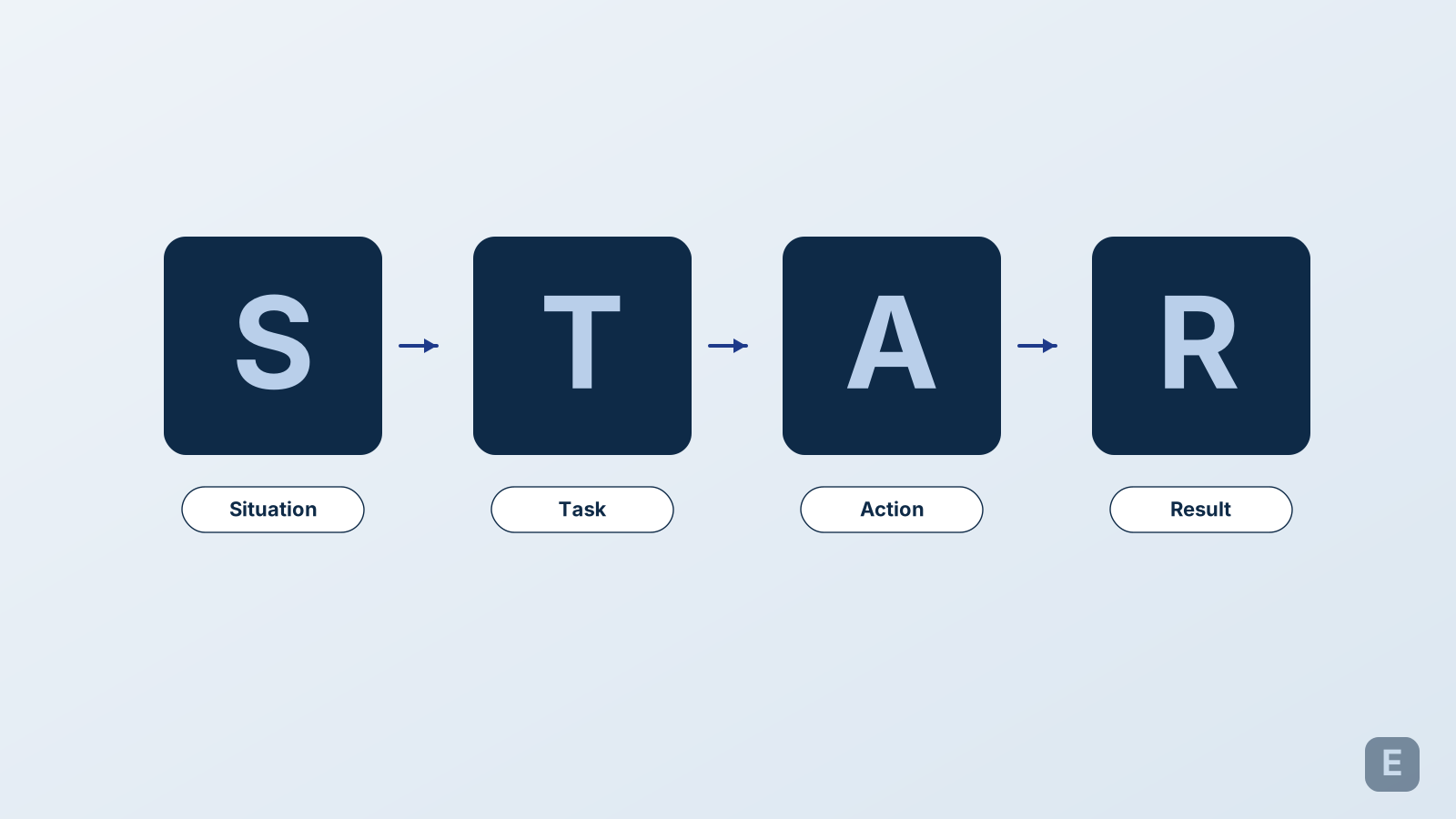
Salary conversations happen after the interview loop closes. The STAR-formatted answers that get you to the offer stage are where the leverage begins — read the STAR method breakdown.
Read the STAR method guideFrequently asked questions
- Should I share my current salary if the recruiter asks?
- In US states where it's illegal to ask (CA, NY, WA, CO, MA and 15+ others), politely decline: "I'd rather focus on what this role pays." In states where it's legal, share only if it works in your favor — otherwise pivot to target: "My total comp target for the next role is $X."
- What if the company insists on a specific number before continuing?
- Give a range with your target as the low end, then $15-25K above. "$X to $Y for the base, with the mix depending on equity structure." This anchors high without pricing yourself out — and companies that walk away over the range weren't going to hit your target anyway.