25 behavioral interview questions — what each one actually tests
Jorge Sánchez·August 24, 2026
The 25 questions that cover 90% of behavioral rounds, what interviewers score on each, and the STAR frame that answers them all — with real examples.
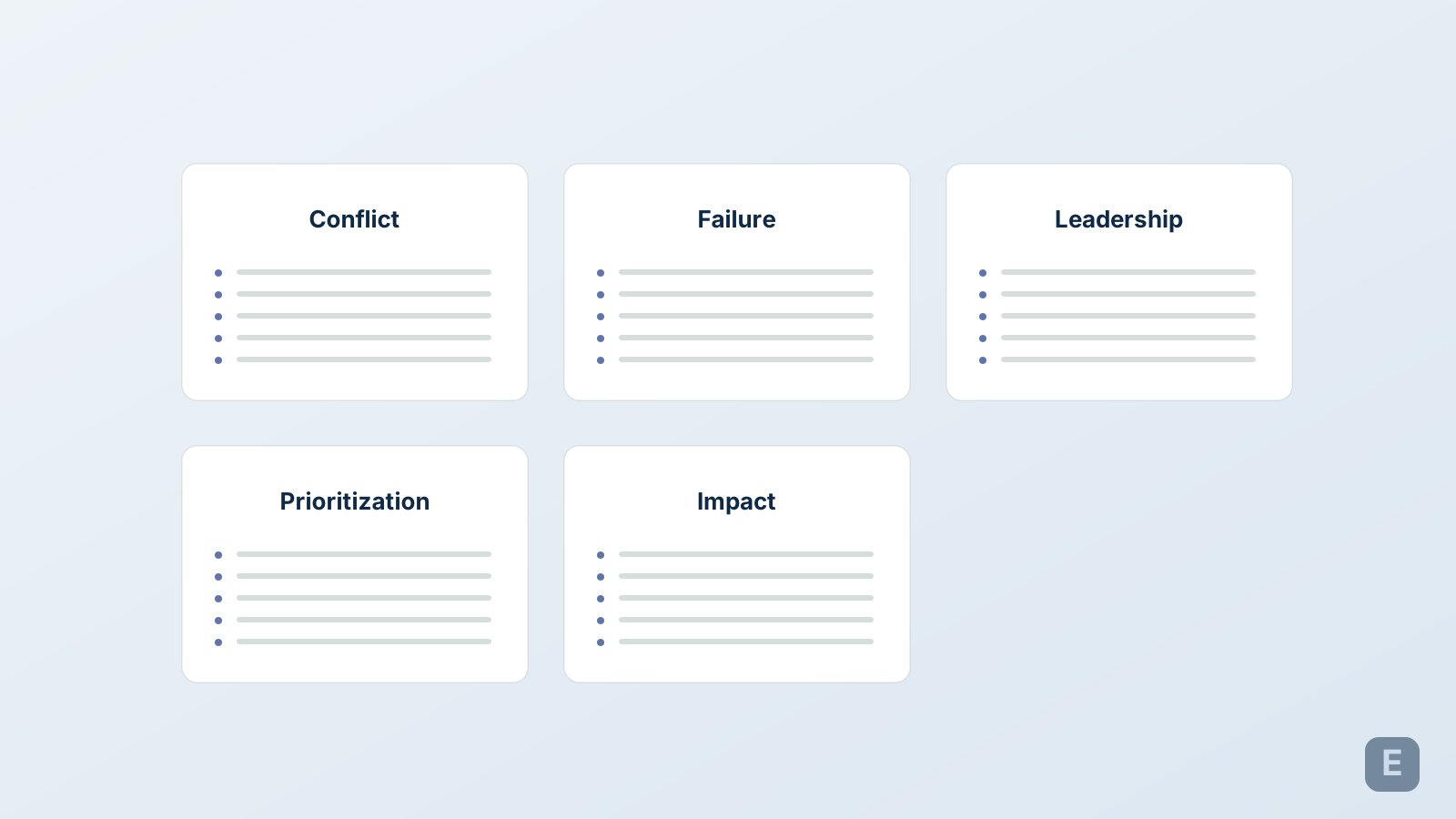
Behavioral interviewers work off a rubric — a small set of competencies they're actively scoring during your answer. Reading the questions in advance won't help you if you don't understand what each one actually tests. This piece maps the 25 most common questions to their real evaluation dimension.
Emplirao's Interview Coach generates STAR-formatted example answers to any of these 25 questions using your actual CV — no generic templates, no fabricated stories.
Try Interview CoachConflict & disagreement (5 questions)
| Question | What it actually scores |
|---|---|
| Tell me about a time you disagreed with your manager. | Comfort with respectful pushback; evidence-driven persuasion. |
| Describe a conflict with a peer and how you resolved it. | Adult conflict navigation without escalation. Kept the relationship. |
| When have you had to give someone difficult feedback? | Directness paired with care; specific vs vague framing. |
| Tell me about a time you had to work with a difficult colleague. | Empathy for the other side's position; problem-solving over venting. |
| Have you ever escalated a decision above your manager's head? | Judgment on when to escalate; stakes clearly framed; done without burning bridges. |
Failure & recovery (5 questions)
| Question | What it scores |
|---|---|
| Tell me about a project that failed. | Ownership without self-flagellation; specific post-mortem takeaways. |
| What's a mistake you made and what did you learn? | Genuine learning, not performative humility. |
| Tell me about a time you missed a deadline. | Communication before the miss, not after. Mitigation plan. |
| When have you received harsh feedback and how did you handle it? | Non-defensiveness; specific change in behavior after. |
| Describe a situation where you had to make a call with incomplete data. | Explicit reasoning under uncertainty; comfort making bets. |
Leadership & influence (5 questions)
- Tell me about a time you led without formal authority.
- Describe a moment you had to influence a decision above your level.
- How have you mentored someone on your team?
- Tell me about a time you had to build consensus across teams.
- When have you had to say "no" to a stakeholder?
Prioritization & ambiguity (5 questions)
- Describe a time you had to prioritize between multiple critical tasks.
- Tell me about a project you started with unclear scope.
- How do you decide what to cut when time is short?
- Give me an example of setting up a process from scratch.
- How do you handle competing priorities from different stakeholders?
Impact & ownership (5 questions)
- What's a project you're proudest of and why?
- Tell me about a time you went beyond what was expected.
- Describe a moment you saw a problem before anyone else did.
- What's the largest scope you've owned end-to-end?
- Tell me about a time you had to make a decision that wasn't popular.
How to prepare (the 3-hour version)
- Draft 6-8 STAR stories from your CV — one per each of the categories above, drawn from different roles when possible.
- For each story, note which 3-5 questions from the 25 above it can answer. Most stories cover multiple questions with a different framing.
- Practice each story out loud until it fits in 90 seconds without notes. Time yourself.
- Have one "soft failure" story ready — a real project that didn't work, not a humblebrag disguised as failure.
The interviewer rarely asks the questions word-for-word from the list above. They paraphrase or combine two. If you've prepared 6-8 stories mapped to the 5 categories, you'll always have a story ready — that's the goal.
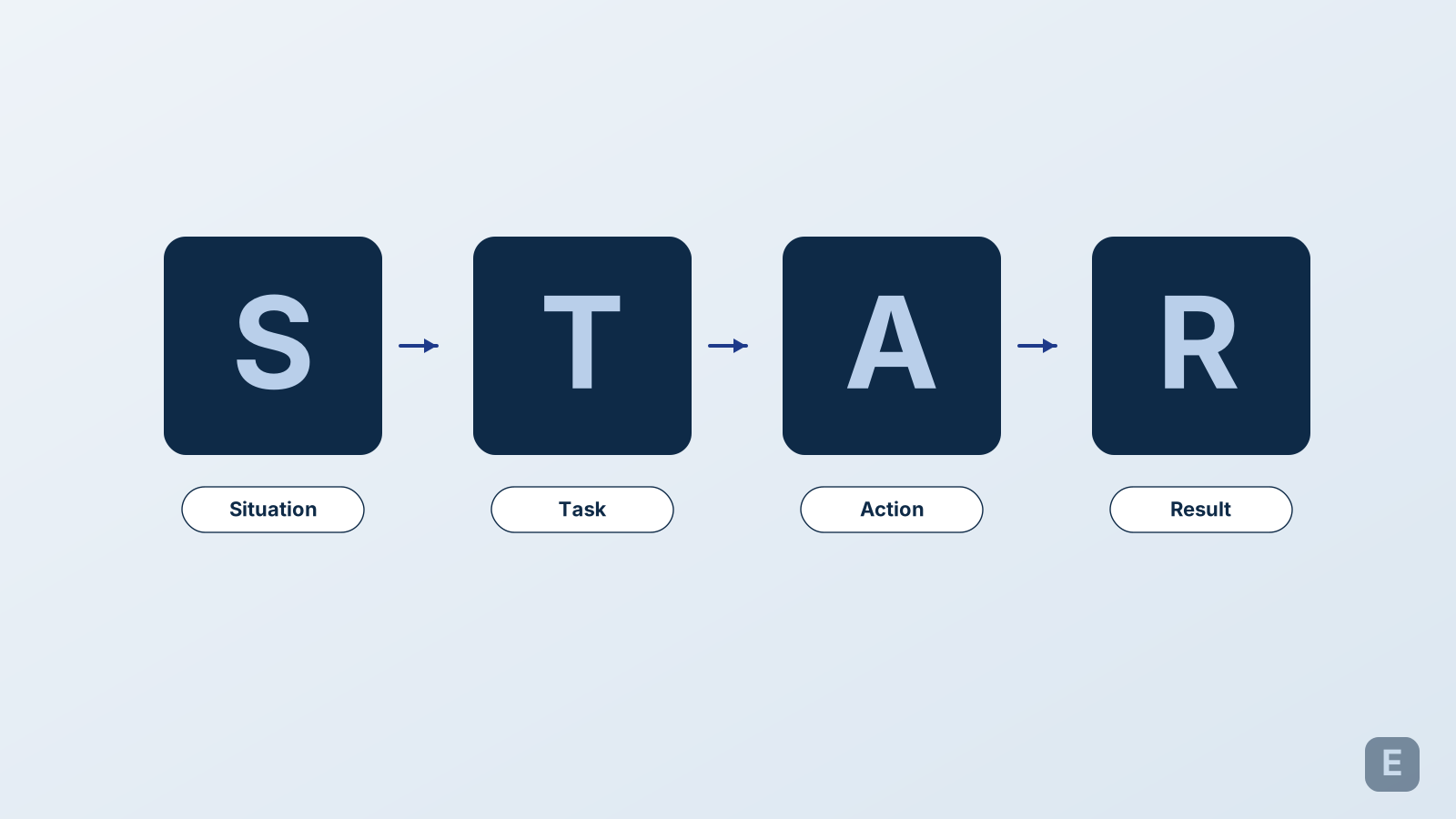
The answer FRAME that scores all 25 questions above is STAR — see the deep guide with worked examples of each category.
Read the STAR method guideFrequently asked questions
- How many behavioral questions should I expect in an interview?
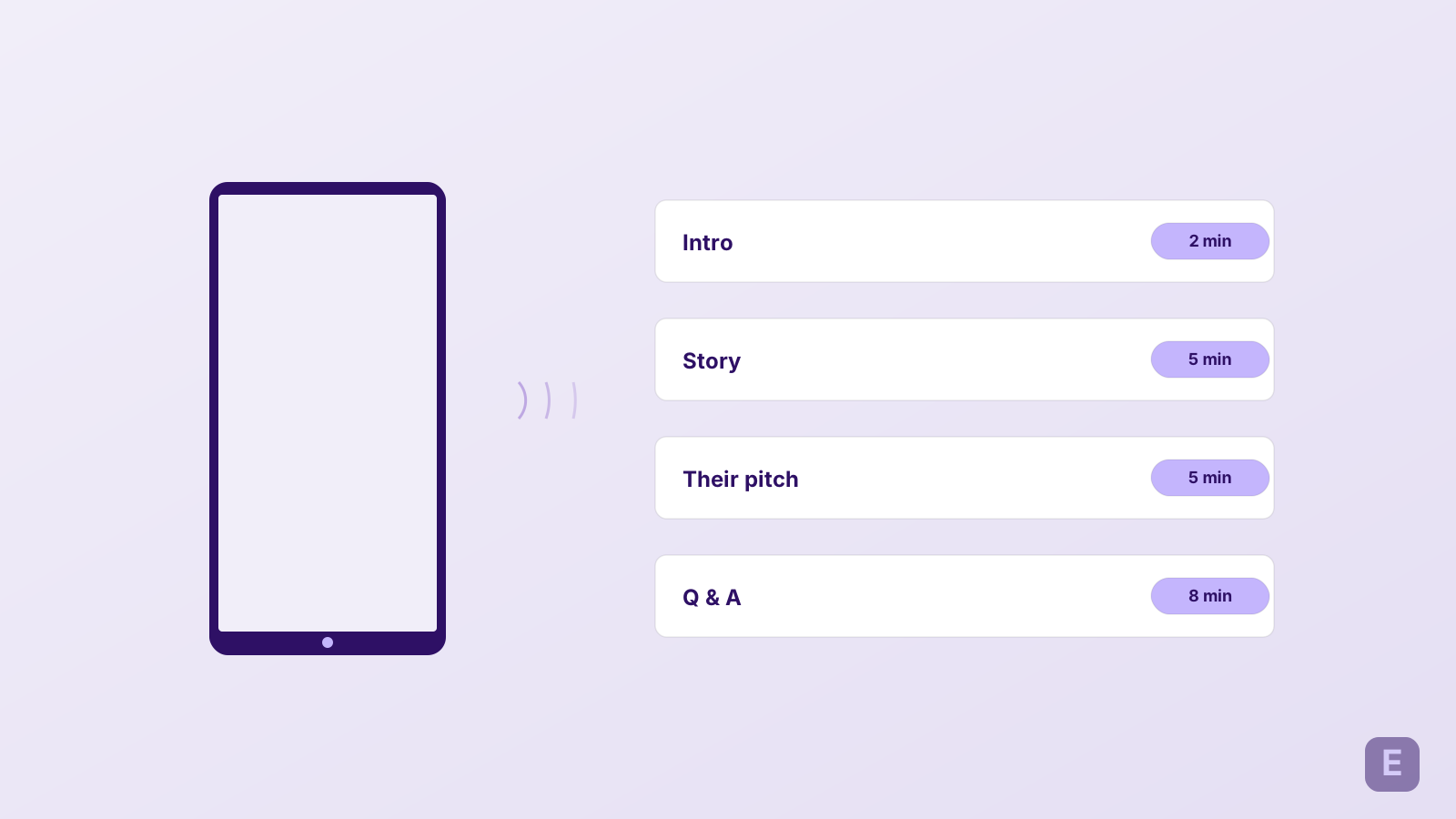
- Typically 3-5 in a 45-minute behavioral round, or 1-2 in a mixed technical + behavioral round. FAANG loops often have a dedicated 60-minute behavioral round covering 4-6 questions from the categories above.
- Is it OK to use the same story for multiple questions in the same interview?
- Once, yes — with a different framing. Twice in the same interview reads as a shallow bench. Prepare 6-8 stories so you can rotate.
- How do I answer "tell me about yourself" — is that behavioral?
- Not strictly behavioral, but it opens the interview and sets tone. Aim for 60-90 seconds: current role + previous role or two + why this role now. No life story, no childhood.